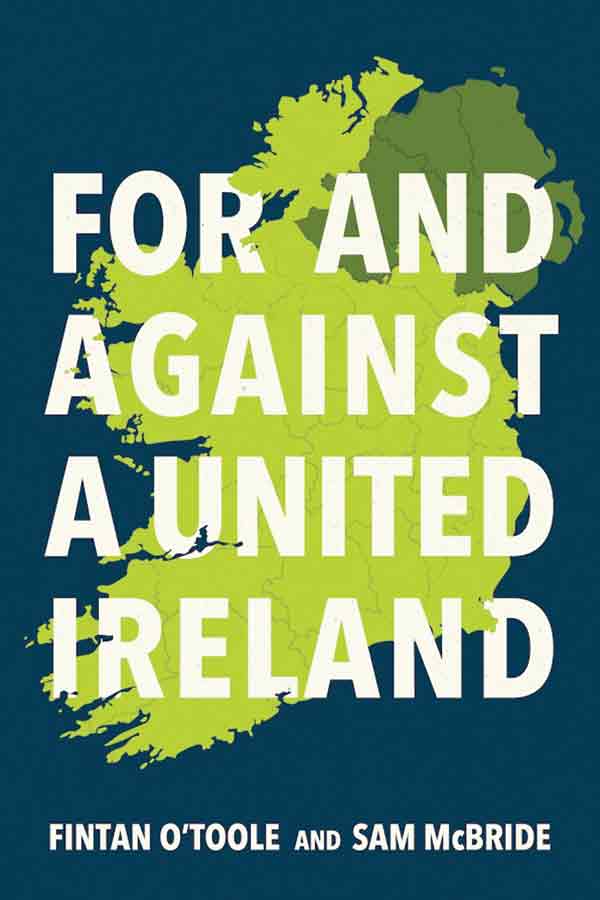



NOTRE DAME, IN—The prospect of Irish unification is now stronger than at any point since partition in 1921. Recently, Sinn Féin leader Mary Lou McDonald even stated that a unity referendum could happen as soon as 2030. But is a united Ireland in its citizens’ best interests?
“If it comes, Irish unity will not be an end to history,” writes renowned journalist Sam McBride in For and Against a United Ireland, coming this February from Notre Dame Press, in partnership with the Royal Irish Academy. “[Irish unity] will not solve all the island’s ills or erase the hatred some of its inhabitants have for their neighbours.”
McBride—who is Northern Ireland Editor of the Belfast Telegraph and the Sunday Independent—and coauthor Fintan O’Toole, columnist with The Irish Times and advising editor of the New York Review of Books, examine the strongest arguments for and against a united Ireland in their new book.
What do the words “united Ireland” even mean? Would unity be better for Northern Ireland? Would it improve lives in the Republic of Ireland? And could it be brought about without bloodshed? O’Toole and McBride each argue the case for and against unity, bringing fresh thinking to one of Ireland’s most intractable questions.
After all, McBride and O’Toole declare, there is much to unite the island, and voters on both sides of the Irish border may soon have to confront what the answer to a referendum question would mean—for themselves, for their neighbors, and for their society.
Buy Book Here!
(Fintan O'Toole was the winner of the iBAM! 2024 Literature Award. iBAM! is the annual Irish Books, Arts and Music Celebration held at the Irish American Heritage Center in Chicago the last 17 years.)
Advance Praise for For and Against a United Ireland
“For and Against a United Ireland is a direct challenge to any assertion that to debate is to polarise and thus to put peace at risk. . . . O’Toole and McBride have ably demonstrated the democratic necessity of debate. It is up to us to realise what it is that we urgently need to be able to argue in defence of, together.”—The Irish Times
"Remarkably and fittingly, unionists and nationalists, northerners and southerners, will find themselves united in recommending this book.”—Slugger O'Toole